

Keffiyeh, Kufiya, Shemagh: Names and Colours by Region
Posted by Mai Wazani on 24th Nov 2026
A square of cotton, folded on the diagonal. Worn against sun, wind and dust, tied at the neck, pulled over the head. Almost every region of the Arab world has one, and each calls it something different.
Keffiyeh. Kufiya. Ghutra. Shemagh. Hatta. They name the same basic cloth. They do not tell the same story. This guide sorts out the names, the colours and the places, so that the next time you see a checked scarf you know what you are looking at, and why the black-and-white one belongs to Palestine in a way no other does.
One cloth, many names
Keffiyeh and kufiya are two English spellings of the same Arabic word. You will also see it written kaffiyeh, and in some places hatta. We use keffiyeh on this site.
Depending on the region, the same cloth is also called a ghutra or a shemagh. So when someone says "keffiyeh", they may mean any of these, and when someone says "Palestinian keffiyeh", they mean something narrower: the black-and-white one. That is where the confusion usually starts, and why the details matter.
Made for the sun
The scarf began as plain protection, a practical answer to a hot, dusty climate. Haitham Kuraishi, a tour guide at the Museum of the Palestinian People, told TIME the idea was a scarf suited to a hotter climate.
In Palestine, the scarf was worn mainly by Bedouin men until the 1920s, writes Wafa Ghnaim, curator at the Museum of the Palestinian People. Bedouin men folded it on the diagonal and held it with a black cord, the 'aqal. Villagers and townsmen wore other head coverings, such as the red tarboosh and the laffeh.
That matters later. A cloth made for fields and desert roads became the cloth a whole people reached for. Its plainness is part of why.
Not always black and white
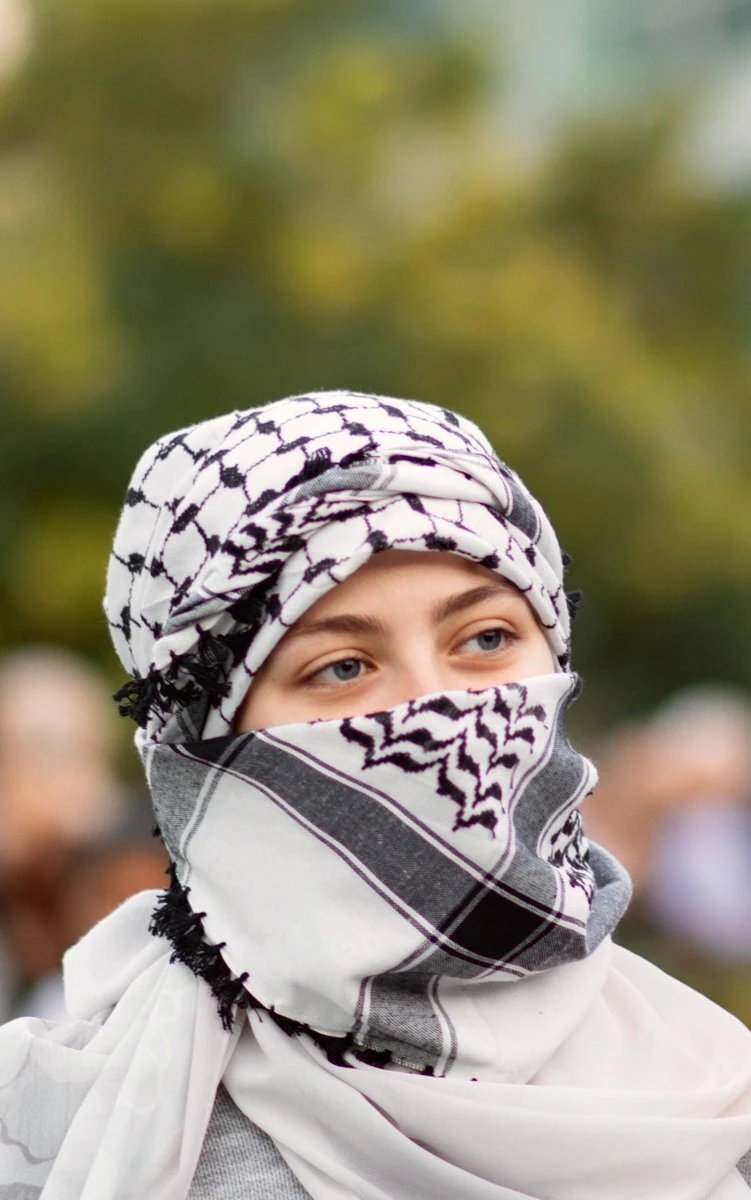
Ask most people today and they will describe a black-and-white check. It was not always the only one. Ghnaim told NPR about the nineteenth-century scarves she has seen: "I see white-black like we see today, but also green. And sometimes I see threads of gold and red." Her own account lists gold, purple, white, black, green and red, woven in cotton, wool or silk.
Kuraishi told TIME the same thing in plainer words: there used to be many different patterns, sometimes different colours and designs.
The scarf has always carried information. What changed over the last century is which version carries the most.
Red and white
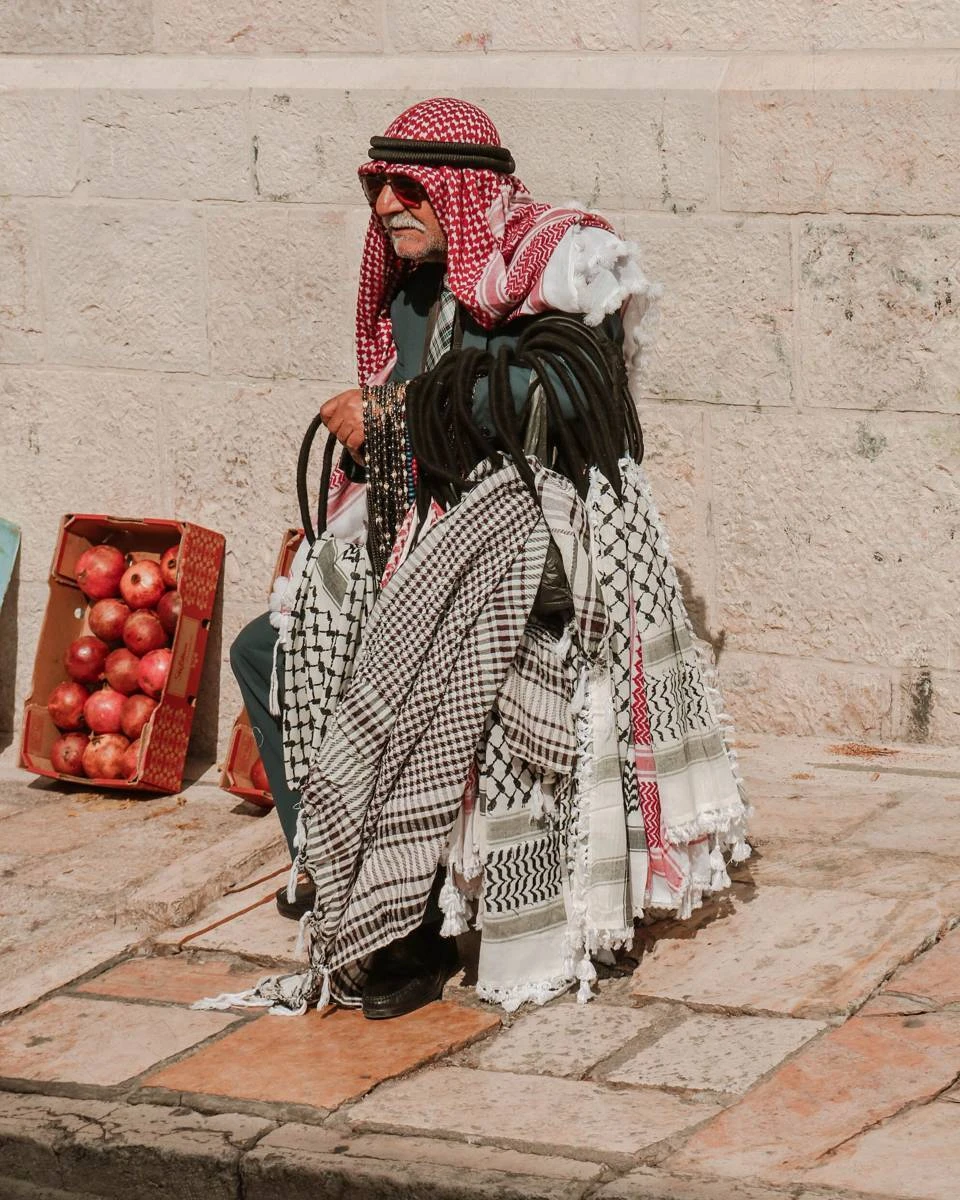
The red-and-white check is the one most people connect with Jordan. Kuraishi told TIME the red one is more popular there. Other Arabic-speaking countries may have similar patterns, he said, but the scarf there does not carry the added meaning of resistance against occupation and invasion that it has among Palestinians.
This is the part that surprises people who have only seen the scarf in a shop window. There is no single keffiyeh. There is a family of cloths, and the check you wear says something about the place you come from or the place you stand with.
How the keffiyeh became Palestine's
"It's really not until the 1930s that we start to see the keffiyeh change in meaning," Ghnaim told NPR.
NPR dates the first political use to the Arab Revolt that began in Palestine in 1936. Fighters used the keffiyeh to hide their features. The revolt's leaders ordered men to wear it, to show solidarity with the revolutionaries. Ghnaim writes that Palestinian men of every social class took it up as a symbol of unity, resistance and nationalism. A cloth from the fields became a uniform of unity.
In the 1960s it came back as a wider icon of Palestinian liberation. NPR ties its link to Palestinian nationalism to leaders such as the late Yasser Arafat, the Fatah co-founder who became chairman of the PLO in 1969 and later president of the Palestinian Authority. He wore it daily. TIME notes that he appeared on its cover in a keffiyeh in 1968. Women wear it too. Ghnaim told NPR that by the 1960s it had become something Palestinian women wore around the neck as well.
What matters is how ordinary it stayed. Kuraishi told TIME that Palestinians wear it for weddings and graduations, not just protests: good times and bad. NPR puts it this way: the keffiyeh comes in a variety of colours, though over the last century the black-and-white one has become synonymous with Palestinians. The same cloth, worn in different places, is a different statement. That is the whole point of knowing the names.
When it left the region
The scarf did not stay put. Fashion took it up and, often, dropped the story. In 1988 a TIME writer argued the keffiyeh had become politically neutral. TIME's own later retelling says that is no longer true. In 2007, Urban Outfitters sold keffiyehs as "antiwar" scarves, then pulled them, saying it was due to the sensitive nature of the item.
A pattern without its story becomes a print. The people it belongs to decide what it means.
Where a Palestinian keffiyeh is woven
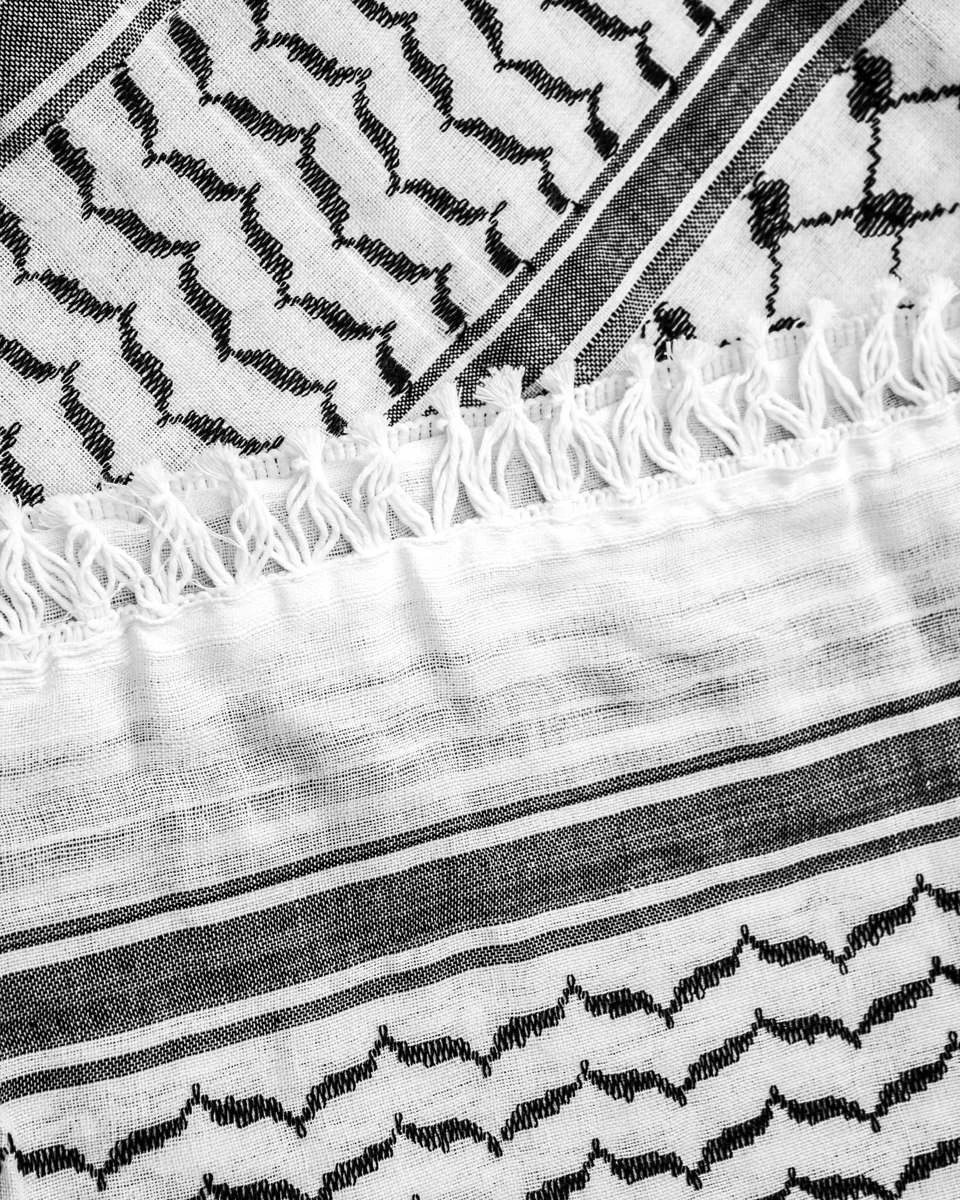
Many black-and-white and red-and-white scarves sold abroad are made in China and Vietnam, The National reports. That is the competition facing one Palestinian maker.
That maker is Hirbawi, a family-owned factory in Hebron. Al Jazeera reports that Hajj Yasser Hirbawi founded it in 1961. He had begun his career importing keffiyehs from Syria, and started his own factory with two looms imported from Japan. Today three brothers run it. The factory says it is the only one in Palestine that makes the Palestinian keffiyeh, and people wish to buy one made in Palestine. On cheaper imports, Izzat Hirbawi told Al Jazeera: "We will compete with importers, our competition is quality."
Those are the factory's own statements, and we report them as that. They are worth knowing because they change a question you may not have asked. When you buy a keffiyeh, ask where it was woven.
How to read the scarf in front of you
- Black-and-white check: the version most closely tied to Palestinians, according to NPR and TIME.
- Red-and-white check: the version most associated with Jordan, according to TIME.
- Ghutra and shemagh: regional names for the same basic cloth.
None of these is a costume. Each is ordinary dress somewhere, first.
The cloth carries more stories than its names. Read what the fishnet, the leaves and the bold lines are said to mean, or see the keffiyeh beside the flag, the watermelon and Handala in our guide to Palestinian symbols and their meanings.
Wearing the pattern
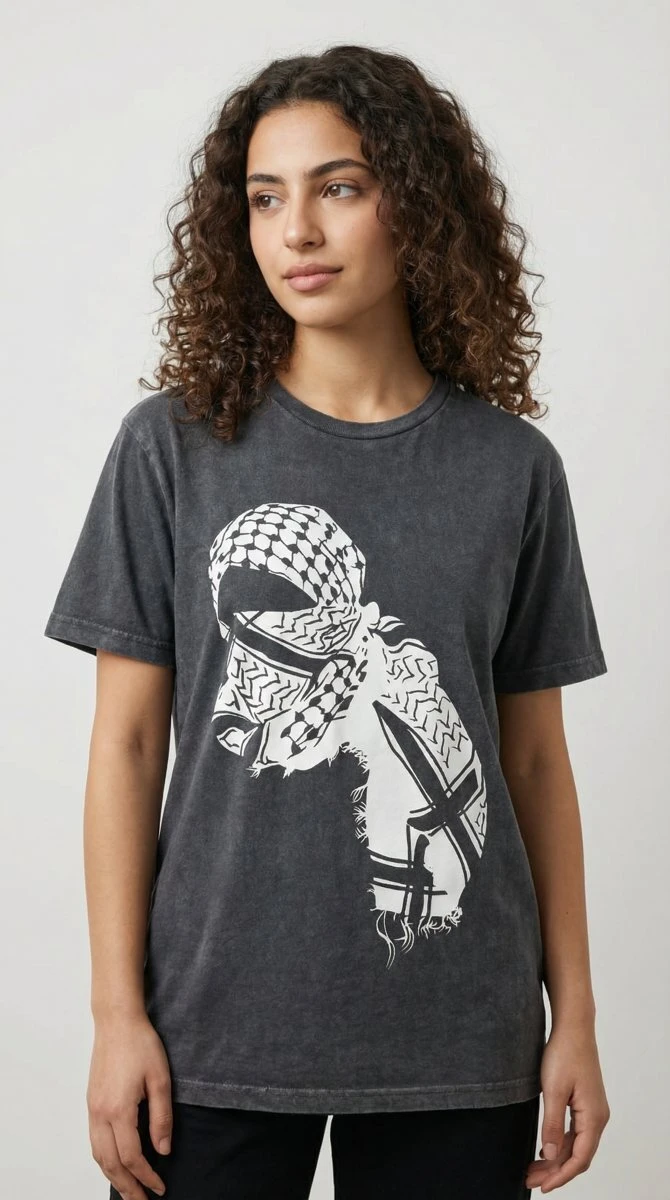
If you carry the check, carry what it is. Know the name. Know the places. The keffiyeh pattern shows up across our range: the Keffiyeh Man hoodie, cut relaxed and unisex in heavyweight fleece; the Keffiyeh Masked tee, also unisex; a canvas tote for the daily carry; a coffee mug and a ceramic coaster for home; and enamel pins, including a small keffiyeh pattern map pin.
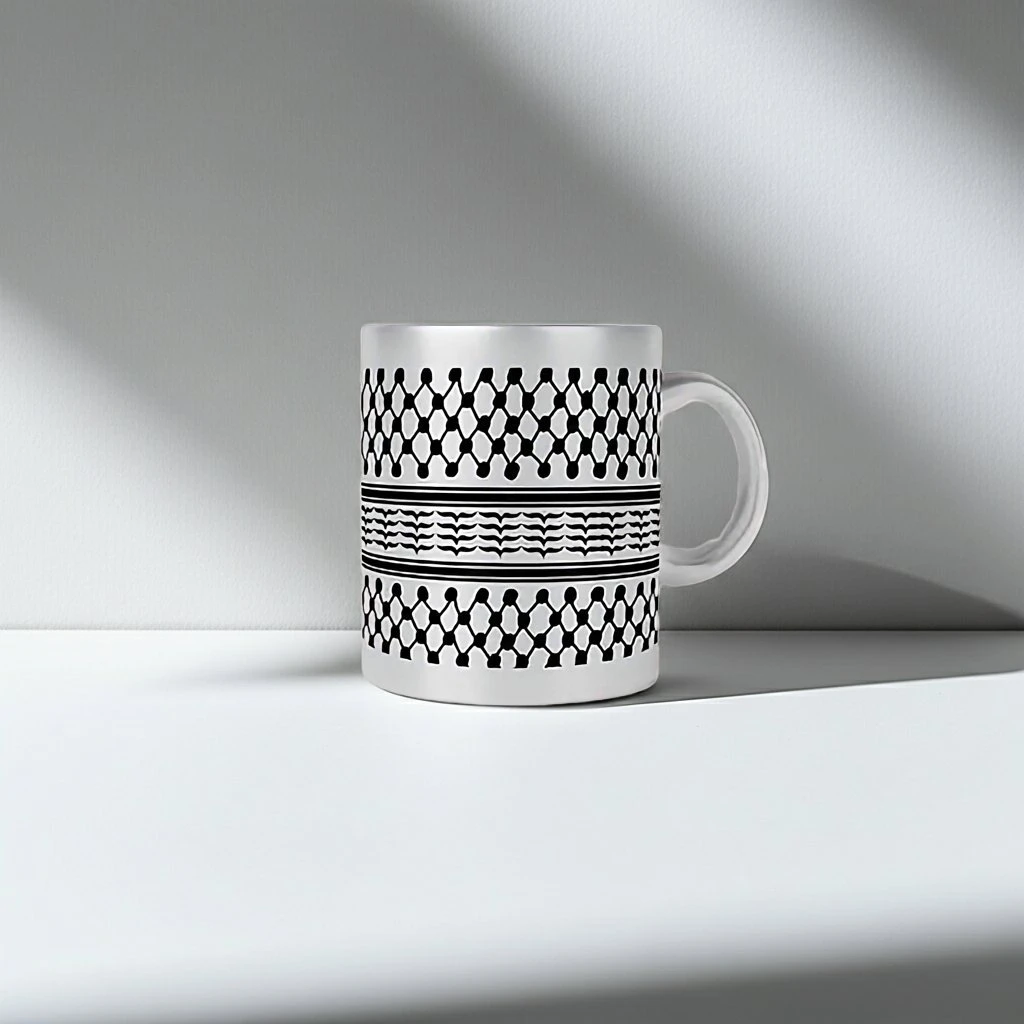
It started as cloth for the sun. It still goes wherever you go.
About the author — Mai Wazani, Founder of Butterfly Krafts
Mai Wazani is a Palestinian activist and the founder of Butterfly Krafts, a Canadian brand rooted in cultural solidarity and diaspora identity. Born from a deep connection to Palestinian heritage, she built Butterfly Krafts in 2021 to channel activism into everyday wear. Her writing explores the culture, symbols, and stories that keep Palestinian identity alive across the diaspora.